Every once in a great while we’re given the opportunity to share something that could actually help the planet even if just one in ten people who read our blog put it into practice (like toting reusable shopping bags or collecting rainwater in a barrel). And this, my friends, is one of those times. Please feel free to pass this info on to your friends and family members!
And who do we have to thank for this wealth of information that just might change the world as we know it (or at least change your impact on the planet from this day forward)? Why none other than my über intelligent little brother Dan (also affectionately known as Almost-Doctor Dan):
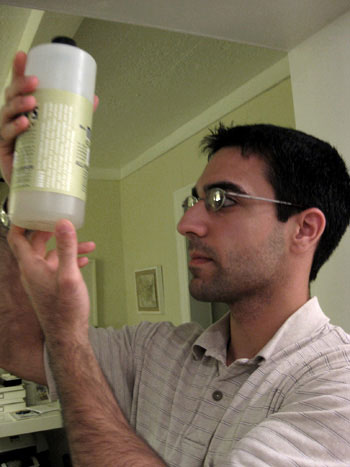
Remember when we introduced him here (and revisited his giant brain here)? As a little refresher, he went to Cornell and graduated with the highest GPA of his entire graduating class (a 4.21 if you’re wondering). Yup, out of all of the kids in Cornell’s College of Agriculture and Life Sciences, he was the Valedictorian. Now he’s a graduate student at Columbia with a Master’s degree under his belt, steadily working his way up to his Doctorate in chemistry with a full scholarship from the National Science Foundation. Not only do they pay for his education but they actually pay him a stipend for rent and food- all in return for wearing a lab coat almost 24/7 and messing around with molecules and polymers all day. Sweet deal huh? Serious Einstein stuff going on.
Anyway, so on a recent phone convo we got to talking about the impending flu season and all the gross germs that seem to be swirling around more and more these days (thanks so about a million media stories on the subject) and Dan shared something so unbelievable that we just had to pass it on. In short, we learned that the idea of antibacterial soap is a marketing ploy that’s actually terrible for the environment. Here’s Almost-Doctor Dan to break things down for us:
What makes most “antibacterial soaps” antibacterial is a chlorinated aromatic compound called Triclosan. By itself this compound doesn’t appear toxic to humans, but every time you wash your hands this stuff is ending up in wastewater and eventually making its way into the environment. Think about how quickly you go through a bottle of hand soap and realize that every last drop of it ends up going down the drain. You’ve got millions of people across the country using this and it’s ending up in lakes, streams, oceans etc (where it’s not particularly biodegradable by the way).
If it were really keeping people from getting sick, perhaps an argument could be made that this is an acceptable consequence, but it really isn’t necessary! Bacteria and viruses can’t penetrate healthy, intact skin. The only way that pathogenic bacteria on your hands can make you sick is if you eat something or touch a mucous membrane (your eyes, nose, mouth, etc); up until that point they are basically harmless and loosely attached to your skin.
And to remove them from your skin before you eat or touch a mucous membrane, any soap that you use will not only dislodge bacteria from your hands but will likely kill it as well by disrupting its cell membranes. This is why the whole idea of an ‘antibacterial soap’ is just plain silly – any type of soap in and of itself will cleanse your hands of bacteria. Unless you work in an environment that requires truly sterile hands (a hospital for example) the use of these antibacterial soaps is a waste of money and resources as well as a bane to the environment.
Is that not the most interesting thing you’ve heard all day? Well, we thought it was, and we couldn’t believe that companies are slapping the old “antibacterial” claim on their bottles to encourage people to purchase them when in fact they’re doing the world more harm than good (and regular old soap and water does the same thing without the environmental harm!). By no means do we mean to be preachy, but we just had to pass this info along in the hopes that even a few other households might adopt an anti-antibacterial approach and keep tons of damaging pollutants from permeating lakes, rivers, and oceans over time (can you imagine how much of a difference this new approach could make if just ten people changed the type of soap that they purchase over the next ten years?).
We also got a letter from another Almost-Doctor (Kristin who’s currently getting her PhD in Germany) who actually works with bacteria on a day-to-day basis. Here’s what she has to say on the subject:
Bacteria, in general, live nearly everywhere. The vast majority is harmless, some are even beneficial. Even when you wash your hands with antibacterial/disinfectant soaps, the remaining bacteria grows back to their normal number within hours or a day. And as I mentioned, some bacteria are actually beneficial. For example, microbiologists who have to use antibacterial disinfectants on their hands several times a day often suffer from skin damage because the beneficial bacterial skin flora is destroyed (and skin damage can make you more susceptible to getting sick while healthy intact skin is usually impervious to germs).
When cleaning we should think of bacteria as a normal part of our environment, not as something that should be completely destroyed. It is impossible to get rid of bacteria completely, and there is no need to. Too much antibacterial disinfection in households can even become dangerous – the more disinfectants that we use, the higher the possibility is that strain of bacteria will become resistant. In addition, some scientists think a too clean environment facilitates allergies – your immune system has to be trained constantly.
Water with soap kills or washes off 99% of all bacteria. If you do not want to use too much soap, or any at all, you can even use a microfiber cloth with water only – the small fibers will collect most of the bacteria and the towel can be washed in hot water to naturally disinfect it afterwards (which destroys the microbes). These two methods of hand washing are completely sufficient for a normal household with healthy people.
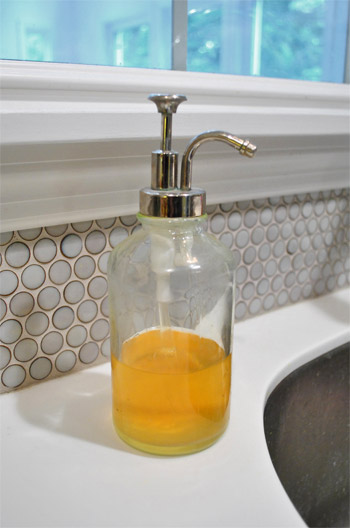
So there you have it. Two insanely smart science-minded brainiacs on separate continents who agree on one thing: lose that antibacterial stuff and wash you hands thoroughly with good old fashioned soap and water to kill germs just as well and do a serious solid to Mother Nature while you’re at it. John and I are big fans of Dr. Bronner’s Pure-Castille Soap (the almond scent is our favorite). It’s sold at Target among other places and it’s made with organic oils and even stored in a 100% post-consumer recycled plastic bottle. Basically, if you’re looking to replace your antibacterial soap and want some extra credit, this stuff is about as pure as they come (it’s certified fair trade and plant-based so it won’t hurt lakes, streams, rivers and oceans in the least). And so ends our little soap diatribe. Here’s to our health this fall! And the planet’s health too.
Need more of a reference than two almost doctors? Check out what the Center For Disease Control has to say on the subject here and here (hint: they agree with the braniacs above).

Kasey at Thrifty Little Blog says
How interesting! I must admit that I would avoid buying certain hand soaps because they didn’t have the anti-bac labels on them. Now I know better :).
Asia says
My mother is a nurse. Her motto is “What doesn’t kill you…well, you’re fine. Here’s a bandaid.”
We’ve never used antibacterial…well…anything! My mother does at work, but not at home or anything. It’s overkill!
Katie says
Thank you SO MUCH for posting this! This is something I’ve believed for a long time, mostly because of almost-Dr.-Kristin’s reasoning that using antibacterial soaps creates more resistant super-germs. There’s also evidence that being exposed to the germs creates a healthier immune system (here’s one article to that effect: http://www.nytimes.com/2009/01/27/health/27brod.html?_r=1). I hadn’t thought about the effects of the soap on the environment, though, so thanks for pointing that out. I love that you guys use your platform to actually make the world a little better-decorated and a little healthier :)
Me says
This world is not our home.
Meredith says
Wow! Very interesting! I learned that Triclosan was bad news a few years ago so stopped using antibacterial soap but I had no idea about the impact on the environment.
I was wondering, what does Almost-Doctor Dan think about Purell-type hand sanitizers? I have a 2 1/2 year-old and I find myself sanitizing her hands in locations without soap and water all the time, like when she’s desperate for a snack at a park without a bathroom.
Thanks! :)
Meredith
YoungHouseLove says
Hey Meredith & Wendy,
Here’s Almost-Doctor Dan’s take on that subject:
I don’t know a lot about hand sanitizers like Purell, but they seem to fall in the category of ‘probably unnecessary’ but not that bad. Again a lot of people have this idea that bacteria on their hands is some terrible thing – as long as you’re not putting your hands in your mouth/eyes/nose it really doesn’t matter (and even if you are, most bacteria is not damaging in any way). Depending on what they have in them they might dry out your skin (which can open you up to a bacterial invasion as opposed to supple healthy skin which is impervious to the stuff) but since you’re not actually washing anything off of your hands it’s unlikely to hurt the environment.
The verdict: good old non-antibacterial soap and water is still the best method, but it’s probably not the worst thing to do in a pinch. Hope it helps!
xo,
s
Wendy says
I had heard that for awhile about soaps… but does the same thing apply to the hand sanitizers like Purell? =) It would make sense if so, but I’m curious. Thanks!
Cindy says
THANKS for posting this! I’ve been wondering what the hype was about not using antibacterial soap but didn’t really understand the details. Now it makes total sense and (at least for the hubs and I) there’s no reason to be using it.
candace says
Thank you for the info…I’m buying eco soaps from now on!
Cheers to being green and making a difference!
Candace
L says
On a somewhat similar note, here’s another question:
I know you guys advocate using ‘green’ cleaning products however I’m very hesitant about using something non-antibacterial in the kitchen. We eat a lot of chicken so I felt uncomfortable using an organic product to clean the counter after preparing it. Also, what about washing your hands with antibacterial soap after handling raw chicken? Necessary or not?
YoungHouseLove says
Hey L,
Good question! Both Almost-Doctor Dan and Almost-Doctor Kristin agree that even when handling food like raw chicken, good old regular soap and water is completely reliable when it comes to rinsing germs right off your hands. And the same goes for wiping down the counter (even super natural products that are 100% homemade like tea-tree oil have antibacterial properties without being damaging) so you can rest assured that any eco cleansers have ingredients to sanitize extremely well, they’re just more natural instead of being man-made. In fact stay tuned for a step-by-step breakdown for whipping up some DIY cleansers that totally shine up the house without fumes or damaging chemicals. Hope it helps!
xo,
s
kelly says
Thank you so much for having a blog entry about this important subject! You have such a large audience and hopefully becoming more educated will affect their choices and maybe you just got some people to change behaviors that our bad for our planet! I was a fisheries biologists/freshwater ecologist and know all too well how so many things humans use daily end up in our water, destroying its quality and aquatic life.
THANK YOU!
Kari says
I love this article! I’m one of the few people I know that refuse to use antibacterial soap (unless I just touched chicken or am contagious). I went to a nerdy math and science camp when I was in 8th grade (yeah, this was a decade ago, but it stuck with me) where we learned about what germs get on your hands after you potty. First of all, no matter the amount of tp you use, you still are germy, so WASH! Second of all, you’re not so germy that your skin might fall off…we learned that using warm water only for about 15-30 seconds was the MOST effective manner of washing hands.
At home I have soap in the kicthen and bathroom that is antibacterial, but it only gets used during times that the husband or I have some sort of contagious illness or just handled meat in the raw.
Great, great post, youngsters!!
P.S. now is one of those times that I’m contagious and this morning I got to thinking about how anal we all are about not getting coughed on, but we all breathe…so I’m curious to know how many more germs come spilling out when I cough versus when I just breathe through my mouth (because right now breathing through the nose is impossible…thank you, head cold)…if you find out an answer to that, please share!!
Jenny @ Words On Wendhurst says
I actually knew this, and have stopped buying anti-bac soaps. I think this is also a leading contributor to the increase in allergies that we have seen in recent years (food and environmental) We are too secluded from our natural environment that our immune system doesn’t know how to deal with any foreign substance anymore!
Sarah says
We were just talking about this last week in my Bio class. It’s kindof scary isn’t it. We don’t use antibacterial soap either. We have been using Dr. Bronner’s Tea-Tree castile for a few years now. I add a small amount of soap to water in my foaming soap dispenser. A little goes a long way. Tea tree oil has natural anti-bacterial properties, so I also add tea-tree EO to my daily shower spray that I make and homemade cleaning solutions.
Sara says
Thank you so much for bringing attention to these important issues!!! I have heard this before and always try to buy regular soap…but sometimes it’s hard to find. It seems like everything these days is anti-bacterial!
Caitlin P. says
can we get a post on this Dr. Bronner’s soap? I’ve been seeing it everywhere but I really don’t understand what it’s for, and the bottle itself doesn’t have any instructions. Is it hand soap? Dish soap? Laundry soap? Floor soap? Thanks!
YoungHouseLove says
Hey Caitlin,
The answer is simple: it’s all of the above. Dr. Bronner’s soap is perfect for hand soap (we have it in all of our liquid dispensers in the kitch and bathroom), face soap, bodywash and can even be used to make dish soap and laundry soap and floor soap (stay tuned for a post all about making homemade cleaning products coming soon). In fact we even know people who wash their hair with it (and reuse the bathwater to water their plants since it’s 100% plant based soap). Seriously the stuff is amazing. It stands to reason that anything that’s pure yet foamy is good for cleaning just about anything and we totally use it as such. Hope it helps!
xo,
s
Audrey says
you just helped me win a bet with my husband – thank you! I love mrs. meyer’s soap, but he’s always hesitant to use it because it’s not antibacterial. now I can site the facts of a genius and get my soap back. :)
Kate says
Love this article! I’ve heard before how antibacterial soaps aren’t really any better than the regular old stuff, but I had no idea about the environmental impact they can have. Very interesting.
Kalee says
My best friend has a degree in chemistry, and has always told me (and anyone who would listen) not to use antibacterial things. She would switch out the soap in her apt she shared with friends, because they would listen to her. My husband and I quit using it because we don’t like the feel of antibacterial liquid soap, so while in England, we picked up some nice smelling bars of soap, and use those instead.
Bree C. says
I must admit that I am the most un-germaphobic person ever. I just don’t care abour germs, and truly believe that anti-bacterial products just make stronger germs.
I really only wash my hands when I use the restroom, after handling raw meats, or when they’re just dirty, and I get sick far less often than most of the people I know who are anti-bacterial fanatics.
prettythings says
Hey, great GREAT article on soap! We never use Anti-Bacterial soap, for the reasons mentioned above. And besides, it’s great to have wonderful smelling soaps next to our sinks (we score them at Home Good, TJ Maxx, etc. and when they come in adorable tins, I re-use the tins for my make up box to organize lipsticks and palette).
Regarding the amount of time to wash your hands – I taught our son to sing “Happy Birthday” while washing his. When the song’s over, it’s time to rinse!
Kim says
Great article. I always suspected as much!
Meredith K A says
Yay! Thank you for this post. My favorite hand soap is Trader Joe’s Next to Godliness lavender scented. It’s glycerine based, and always makes my hands feel squeeky-clean, plus the hubs and I love the lavender smell. We don’t have a TJs anywhere nearby, so we always stock up when we visit our friends in Northern VA.
We just made our first batch of homemade laundry soap (none of that stuff that causes algae blooms and dead zones in the oceans!), and it works great. Unfortunately my favorite face soap contains triclosan, but I am intrigued by this Dr. Bronner’s stuff, so I am definitely going to check it out. Thanks for the tip and the great info!
As I understand it, Purell and those other clear hand sanitizers are basically rubbing alcohol in a gel plus maybe some fragrance so it doesn’t smell all alcohol-y. So it’s not bad for the environment and doesn’t create resistant bacteria, but I am totally with Bree C. – unless you have a compromised immune system for other reasons, washing your hands for the usual reasons is all you need to do, and it’s better for your health if you don’t try to live in a 100% sterile environment. I’m also the opposite of a germaphobe, and I have not had a cold or the flu in over 2 years.
One last thought: triclosan is anti-BACTERIAL. The flu and the common cold are caused by VIRUSES, which are not killed by triclosan. Washing your hands is a good practice during flu season because it washes the virus off of your hands, of course, but using antibacterial soap isn’t any better than regular soap for the additional reason that your main enemy in the germ world is NOT bacteria, it’s the flu VIRUS!
Cathryn says
A great post! Thanks so much to the Almost-Doctors for their time and expertise, too!
claire says
wow – i had no idea about this! i have always only bought anti-bac soap because i assumed it was better! now i will be buying regular – and plus, there are way more fun choices on non anti-bac!
i had heard that too much anti-bac stuff like purell can make your immune system weaker, but i didn’t realize the environmental aspects for the soap… thanks for sharing!
chacha says
Right on, Youngsters! I have been saying this about that antibacterial stuff for a while now – all we are doing is increasing the likelihood of bacteria morphing into more antibiotic resistant strains (i.e. mrsa). I try to check the labels for triclosan before I buy it and I never use hand sanitizer. And you know what? I’m almost never sick (watch, now that I said that I’ll get the flu tomorrow).
Jen Z. says
Great topic. Thank you for posting this. I stopped used these kinds of soaps a few years ago for this reason. What does Almost Dr. Dan think about products like Method, Seven Gen, etc? I know it’s a little off topic, but are these products really “Green” products? Would love to hear more of what he thinks about so called “Green” products. Thanks.
YoungHouseLove says
Hey Jen Z,
We wish Almost-Doctor Dan could weigh in more on individual products like Method or 7th Generation but since they’re not his direct area of expertise he prefers to stay mum (you know braniacs, they have to have all the info before just blurting out an opinion). But rest assured if he ever expands his focus and specifically studies those products we’ll definitely share all of his findings on the topic!
xo,
Sherry
Jenny @ Making the Most of Money says
“highest GPA of his entire 2007 graduating class at Cornell (a 4.21 if you’re wondering)”
Sorry.. As a 2008 Cornell grad, I just about fell out of my seat. I could barely focus on the rest of the post (I did know antibacterial was mainly hype, so hopefully I didn’t miss too much).
I am thoroughly and massively impressed at the brain power of Almost Doctor Dan. I was lucky to make the Dean’s list in Engineering – and the med students were the only students who were more brainy/studied more than the engineers. Impressive.
Keep it up with the Almost Doctor Dan posts!
Leslie Martin says
TJ’s sells a castille soap that works well. I even water it down a bit to save a little time between purchases and a few more pennies.
heyruthie says
FYI: don’t actually put Dr. Bronners in the dishwasher though! I tried, and it’s way too foamy! It messed up my dishwasher. It’s good for hand washing dishes though. I really do love it!
YoungHouseLove says
Heyruthie,
Good tip! Everyone hear that? It’s good for washing dishes in the sink, but too bubbly for the dishwasher (we prefer 7th Generation for that, and we also have some homemade dishwashing formulas in the hopper so stay tuned…).
xo,
s
Jill says
I’ve heard that Dr. Bronner’s doesn’t work so well in liquid soap dispensers. Have you guys had any problems with it clogging up or anything?
YoungHouseLove says
Hey Jill,
Good question! It does say that it can clog dispensers and ours do get a bit jammed from time to time but I use the tip of an unfolded paperclip to pierce the dispenser and we have a nice even flow for at least another week or two and then I just pierce them again when I’m doing other bathroom maintenance and cleaning. It’s definitely an extra step but it only takes a second and it’s so worth it because we love the scent and the pure formula of Dr. Bronners!
xo,
s
Katie says
I think it is a little dangerous for a PhD grad student to be telling people it is unnecessary to use antibacterial products. It is funny to joke that he is “almost doctor Dan” but almost PhD is not someone who should be giving health advice. Natural bacteria that is one our skin is not what causes cold and Flus. It is the bacteria from those around us who have cold and Flus that does. If you are confined to your home this is all fine and cheery to talk about, but let’s be real. It is dangerous to give this advice to those of use who are out in the world all day.
As a heathcare provider I think it is best you stick to home design. I am offended you posted about this. Just because you have a platform does not mean you should preach about topic you are not educated on. This is irresponsible.
YoungHouseLove says
Hey Katie,
You seem to take issue with the fact that Almost-Doctor Dan doesn’t have his PHD yet, but would you trust the CDC (The Center for Disease Control And Prevention)? Here’s what they have to say on the topic (yup, they agree with Almost-Doctor Dan):
http://www.cdc.gov/ncidod/eid/vol7no3_supp/levy.htm
http://www.everydayhealth.com/cold-and-flu/antibacterial-soap.aspx#continue
And here’s an actual doctor (Dr. Ben Kim) who also argues that antibacterial soap should not be used (along with far worse claims when it comes to the Triclosan ingredient in antibacterial soaps): http://chetday.com/antibacterialsoapdanger.htm
And just to be thorough, here are a few other articles on the subject written by experts from reputable news sources which reach the same conclusion as Almost-Doctor Dan. We take the information that we share very seriously and not only is my brother the smartest guy I know, he is definitely not alone in his opinions on this subject:
http://www.worldwatch.org/node/1501
http://www.commondreams.org/news2008/0717-03.htm
In addition, you mention the flu so you might want to check out Meredith’s great point above (excerpted here):
Triclosan is anti-BACTERIAL. The flu and the common cold are caused by VIRUSES, which are not killed by triclosan. Washing your hands is a good practice during flu season because it washes the virus off of your hands, of course, but using antibacterial soap isn’t any better than regular soap for the additional reason that your main enemy in the germ world is NOT bacteria, it’s the flu VIRUS!
Hope it helps!
xo,
Sherry
Update: In fact, Triclosan is actually not used in Germany since it is denounced by the authorities there! Read Almost-Doctor Kristin’s comment above for more info.
Katie says
Love the arrangements, especially John’s handiwork on the wedding pic! My group of friends will be meeting together this Halloween for a 1/2 hour birthday party. Our whole group (9 in all) have birthdays between August and December, so we opted to do a single party on Halloween rather than individual parties. We’ll each have our own half hour to celebrate.
Terry G says
Trader Joe’s carries the liquid and bar soap in our area. The peppermint Dr Bronners is a big hit at my house. When we started using it, I ended up getting rid of the other soaps in the house.
Rebekah says
Thank you for sharing this! As to the comment about “sticking to home decor,” I’m pretty sure neither of you have interior design degrees, right? Does this make you any less qualified? No.
I know health is a whole different ballgame than decor, but keep up the great information — I think it’s obvious that Almost-Doctor Dan knows what he’s talking about. Plus happy home equals healthy home!
Katie says
Oops, commented on the wrong post. :)
nicky says
thanks for posting this, yhl!!! i have actually been telling ppl this for years, not because my doctor told me or i read a medical journal – believe it or not, while i was sitting in my doctor’s exam room one day waiting for him to come it, i read the little hand-washing card next to the sink. it said that as long as you use lukewarm water and a soap (not anti-bacterial), that you would get rid of all the germs. i also took to heart things i heard about antibacterial products making resistant strains of bacteria, and it just confirmed my feelings.
thanks again, and keep the informative stuff coming – no matter what some poopers say!
nicky
Anne says
Great post! I too use Dr. Bronners and try to keep anything anti-bacterial out out of our home.
Almost-Doctor Kristin says
Hi everyone,
Great post! I’m glad I could help with some info. All your comments are all so great, I would never have thought that so many people out there find this topic so interesting!
About triclosan – I did not write anything on that because in Germany, triclosan is not recommended as a household disinfectant by the authorities. Its chemical structure is quite similar to some antibiotics and the low concentrations in house cleaners (especially once they are diluted with water) so it could easily lead to resistant bacteria.
Thanks!
YoungHouseLove says
Hey Almost-Doctor Kristin,
Thanks so much for your help with this post! And we’re super interested to hear that triclosan is actually not recommended by the authorities in Germany since it could easily lead to resistant bacteria. If that’s not something to think about I don’t know what is?!
xo,
Sherry
Olga says
Thanks so much for bringing up these issues! I also learned about Triclosan a couple of years ago. Did you know that it’s in some types of toothpaste as well? It’s listed right on the tube so you can check and there are many mainstream toothpastes that don’t have it so it’s quite easy to avoid as long as you’re aware.
For kitchen bacteria, a 50/50 vinegar/water mixture works quite well. It’s also good to remember that many of the ickies that you’d get from i.e. raw chicken need a moist environment and nutrients in order to survive so they’d not be too happy if left to dry out on the counter.
YoungHouseLove says
Hey Olga,
We had no idea triclosan was also in toothpastes! Thanks so much for bringing that up!
xo,
s
Keri R. says
Hey John and Sherry!
I love Dr. Bronners soaps and just thought I would pass on a tip. Many Natural Food Co-op’s carry Dr.Bronners soap by the gallon and you can take your empty bottle in and refil it. That way there is less packaging waste!
Also for those interested in finding the Dr. Bronner’s soap, Vitacost.com carries it for super cheap and shipping is pretty inexpensive too!
Rachel says
I’m always surprised people don’t know this, but I’m glad you shared the information.
Kelly says
I was just saying the other day that I bet there was going to be a huge health/environmental fallout from all of the santizers that are being pushed on swine-flu crazy workplaces like mine. Do people actually get sick any less these days? Thanks for making me feel like a genius!
Chris says
What about anti-bacterial products affecting immunity? I’m no doctor, but does it not make sense that if you are exposed to a certain amount of bacteria it would actually help your body build its immunity to that bacteria and therefore keep you from getting sick if you do come into contact with it? Also, what about viruses? Most more serious illnesses (cold, flu, strep) are caused by viruses, right? I’m assuming that anti-bacterial soaps don’t kill viruses (otherwise they’d be called anti-bacterial, anti-viral soaps). Are we defenseless against viruses?
Chris says
ok I see you answered my question before I could post it. thanks for clearing that up because a lot of people don’t seem to understand the difference between bacteria and viruses.
Gail says
Dr. Dan is right.
Jeannine @ Small and Chic says
Have you ever seen Jeremy and Kathleen’s post about Dr. Bronners?
Hilarious! I never stopped to look at the tiny text on the label!
YoungHouseLove says
Hey Jeannine,
That’s so funny because we just noticed the funny rantings on the label the other day. I love that Jeremy and Kathleen scanned it for our reading pleasure! It’s definitely entertaining and weird all at the same time! But you just can’t beat their soap!
xo,
s
Amy Y. says
My husband who is a dentist and a bio major himself has been ranting about this for years. He hates to see all of the antibacterial soap commercials floating around. He also won’t let our kids use hand sanitizer because of the high alcohol content and the fact that it could easily give alcohol poisoning to small children if they somehow ingested it. Gotta love doctors and almost doctors.
Wendy says
Hand sanitizers kill both bacteria and viruses. It is incorrect to put them in the same boat as antibacterial soaps.
Proper use of an alcohol-based hand sanitizer
Alcohol-based hand sanitizers — which don’t require water — are an excellent alternative to hand washing, particularly when soap and water aren’t available. They’re actually more effective than soap and water in killing bacteria and viruses that cause disease. Commercially prepared hand sanitizers contain ingredients that help prevent skin dryness. Using these products can result in less skin dryness and irritation than hand washing.
Not all hand sanitizers are created equal, though. Some “waterless” hand sanitizers don’t contain alcohol. Use only the alcohol-based products. The CDC recommends choosing products that contain at least 60 percent alcohol.
YoungHouseLove says
Hey Wendy & Katie,
We didn’t mention hand sanitizers at all in the post (we just wanted to share the facts about antibacterial soap vs. regular soap as they are backed up by the Center For Disease Control) and Almost-Doctor Dan only touched on them in the comments to admit that he’s no expert in that category and say this:
I don’t know a lot about hand sanitizers like Purell, but they seem to fall in the category of ‘probably unnecessary’ but not that bad. Again a lot of people have this idea that bacteria on their hands is some terrible thing – as long as you’re not putting your hands in your mouth/eyes/nose it really doesn’t matter (and even if you are, most bacteria is not damaging in any way). Depending on what they have in them they might dry out your skin (which can open you up to a bacterial invasion as opposed to supple healthy skin which is impervious to the stuff) but since you’re not actually washing anything off of your hands it’s unlikely to hurt the environment.
You’re right, they are in a totally different boat since they’re not washed off! But do be careful with hand sanitizers and children as there are numerous cases of children ingesting them and getting alcohol poisoning:
http://www.snopes.com/medical/toxins/sanitizer.asp
http://featuresblogs.chicagotribune.com/features_julieshealthclub/2007/05/getting_drunk_o.html
http://safety.lovetoknow.com/Hand_Sanitizer_Dangers
And as for being shocked and concerned at the notion that hand sanitizers aren’t being referred to as absolutely necessary, John and I don’t use them and have not gotten the flu or even a bad cold in over five years, so while some people might deem them completely necessary there are clearly many people who don’t use them and don’t get sick very often (as evidenced by many people’s comments to that end right here on this post). After all it is proven that exposure to germs increases your immunity, even in babies. In fact here’s an article from The New York Times to that effect: http://www.nytimes.com/2009/01/27/health/27brod.html?_r=1%29
xo,
s
Katie says
Thank you Wendy!
At least someone here gets it!!!
I was shocked when they said to Meredith and Wendy that hand-sanitizers are not necessary. Shocked and concerned. Myths like this are dangerous. Hand-sanitizers are your best defense this season.
Deb says
Ooh ooh! Mr.Kotter, I have a question!
Three of my girlfriends have just had babies. Prior to holding the babies we are asked to use anti-bacterial hand sanitizer thoroughly which up until your post made total sense. Would you mind asking almost Dr.Dan if just washing our hands prior to the baby holding is good enough or must we wash and then apply this anti-bacterial gel?
Thanks and this post rocked :)